Election Dataset
Election
Elections are an essential part of a democratic system, providing citizens with the opportunity to choose their leaders and representatives through a free and fair voting process.
Here are some key points about elections:
- Elections provide a way for citizens to express their political preferences and make decisions about who will represent them in government.
- The election process typically involves voter registration, candidate nomination, campaigning, and the actual voting process.
- Elections can be held at various levels of government, from local and regional elections to national and even international elections.
- The outcome of elections can have a significant impact on government policy and decision-making, as well as on the lives of citizens.
- Free and fair elections are essential for a functioning democracy, as they ensure that political power is distributed according to the will of the people.
About Dataset
- The dataset includes election results from the year 2004 to 2019 of all states in India.
- The BJP (Bharatiya Janata Party) is the party that has won the most seats in the elections listed in the dataset.
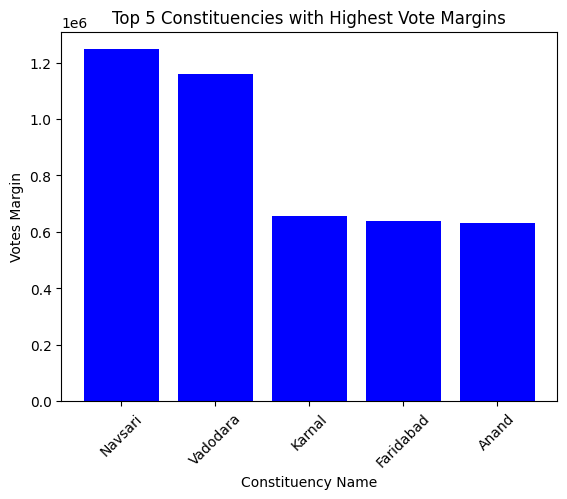
- The dataset includes several instances where the margin of victory for the winning candidate was over 500,000 votes.
- Some of the winning candidates listed in the dataset are well-known politicians, such as Narendra Modi (the current Prime Minister of India) and L.K. Advani (a former Deputy Prime Minister of India).
- The highest number of votes received by a winning candidate in the dataset is 689,668, which was achieved by Shri C.R. Patil in the Navsari constituency of Gujarat in 2019.
- The dataset also includes some instances where independent candidates have won elections, such as Sansuma Khunggur Bwiswmuthiary, who won the Kokrajhar seat in Assam in 2004.
Election Dataset Tableau
Election Dataset Python